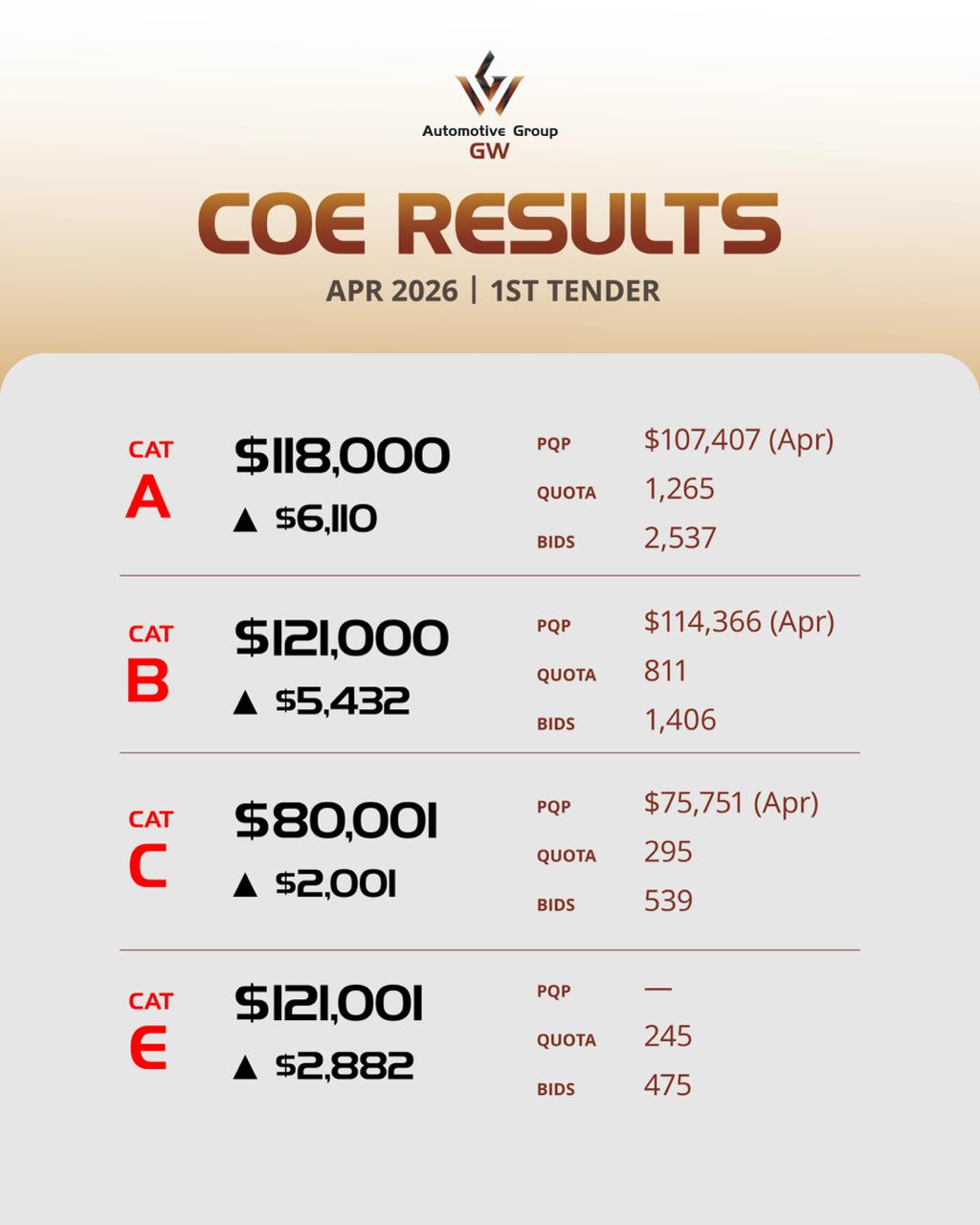
If you’ve been watching the COE bidding results in early 2026, you’ve likely seen something that feels “wrong.” For the first time in years, the price to register a “mass-market” Category A car has actually climbed higher than a luxury Category B car.
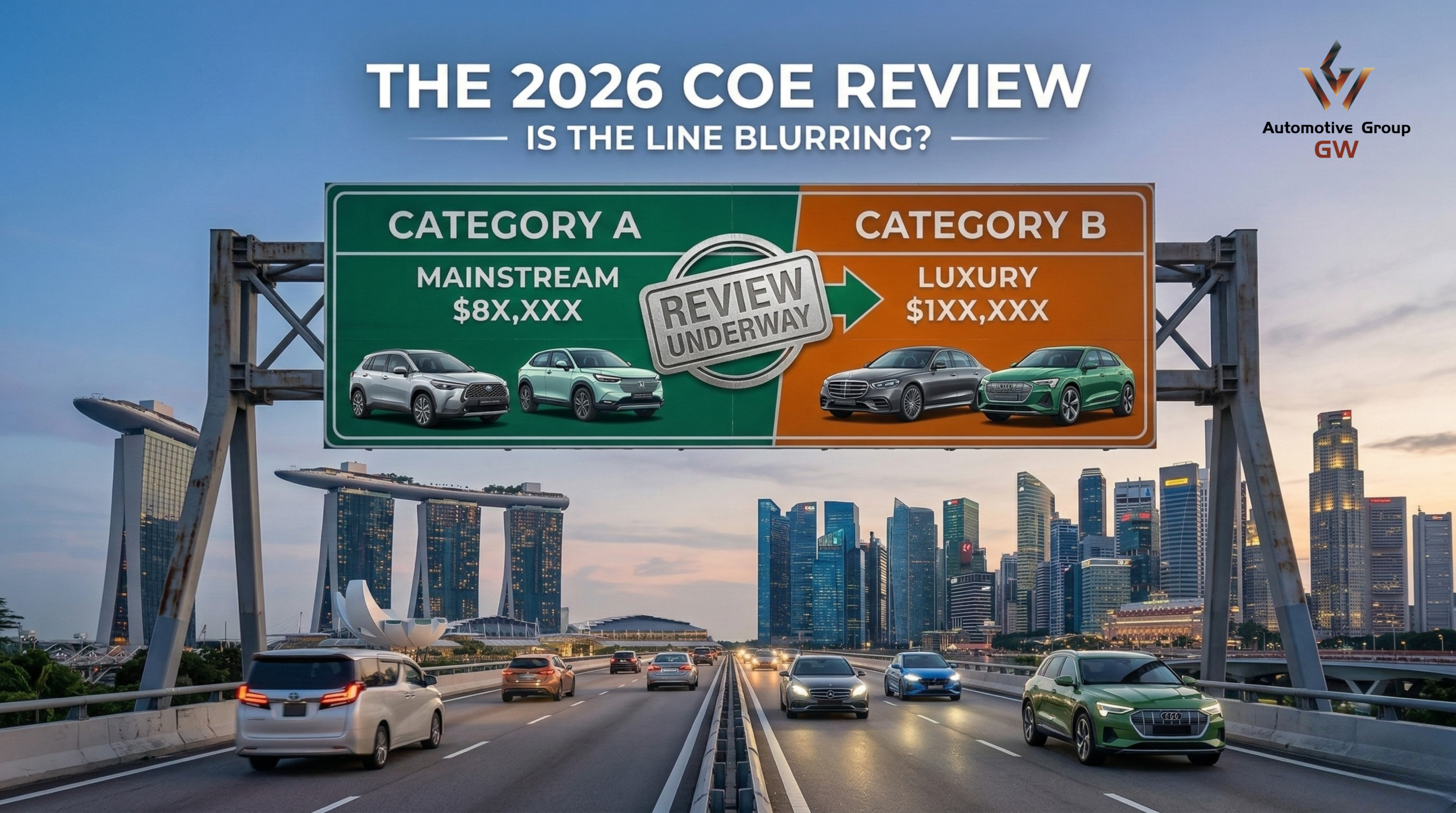
Following this price convergence, the Land Transport Authority (LTA) officially announced on March 4, 2026, that a comprehensive review of the COE categorisation system is now underway.
Coming hot on the heels of the recent 2026 PARF rebate changes, this review marks the second major shift in Singapore’s automotive landscape this year. Here is what you need to know about what’s changing and how it affects your next car purchase.
The Problem: The “Cat A” Identity Crisis
Category A was originally designed to keep “bread-and-butter” cars accessible for the average Singaporean family. However, two major trends have broken this system:
-
The EV “Detuning” Loophole: Electric vehicle manufacturers have become highly efficient at tuning powerful motors to stay under the 110kW limit for Category A.
-
Premium Brands in the Small Car Pool: Luxury brands now offer many entry-level models that technically fit Cat A specs, meaning a first-time car buyer is often bidding against a luxury car buyer for the same certificate.
What’s on the Table? The OMV Proposal
The most significant change being studied is a shift toward Open Market Value (OMV) as a category divider.
Currently, categories are defined by engine power and capacity. Under the proposed review, a car’s price (value) could determine its category. This means:
-
True Mass-Market Protection: Cars with lower OMVs would be protected in Category A.
-
Luxury Taxing: High-OMV “premium” cars would be pushed into Category B, regardless of how small their engine or motor is.
Why 2026 is a Year of “Double Impact”
For the Singaporean car buyer, this review doesn’t exist in a vacuum. It works in tandem with the new PARF structure.
As we highlighted in our previous deep dive on [Navigating the 2026 PARF Rebate Changes], owners of new cars will now receive significantly lower rebates when they scrap their vehicles. If the COE review results in higher premiums for certain “premium-lite” models, the total cost of ownership for those cars will rise from both the front-end (COE) and the back-end (PARF).
GW Auto Insight: If you are planning to buy a car in the next 6 months, the market may see some volatility. The LTA review is expected to conclude by the end of 2026, and “wait-and-see” sentiment could lead to temporary fluctuations in bidding intensity.
What Should Buyers Do Now?
While the LTA has stated there are no immediate changes to the system during the review period, motorists should remain prudent.
-
Focus on Total Value: Don’t just look at the monthly instalment. Factor in the reduced PARF returns and the potential for COE categorization shifts.
-
Consult the Experts: At GW Auto, we track these policy shifts daily to ensure our clients get the best possible value in a changing market.
Unsure how these new policies change the math for your dream car? Whether you’re looking for a reliable family SUV or a tech-forward EV, our team is here to help you navigate the 2026 regulations. [Contact GW Auto today for a personalized consultation] or browse our latest listings.